Engineering Problem
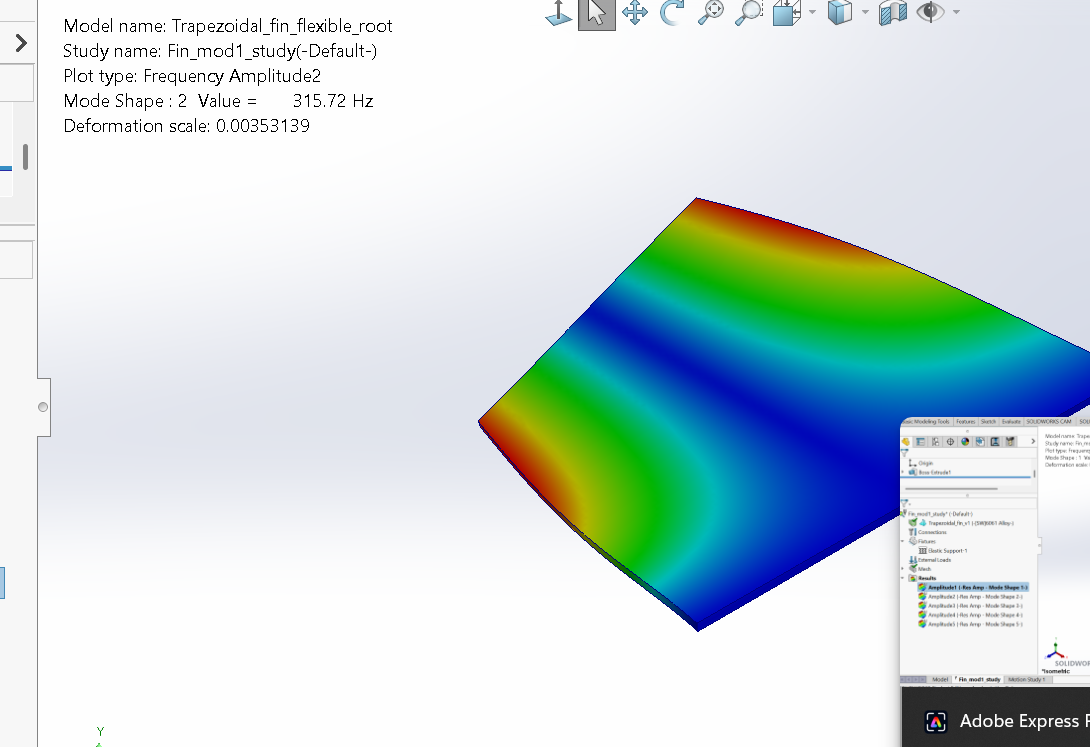
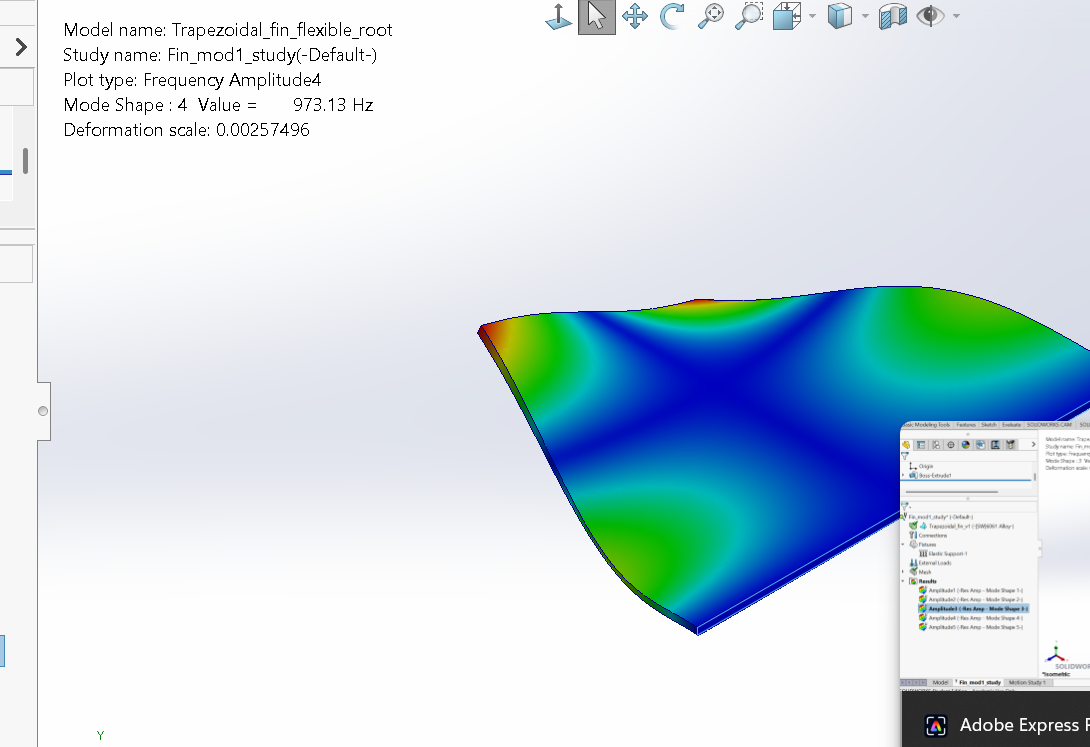
Evaluate the modal behavior of a trapezoidal aluminum rocket fin and quantify separation between the first bending and torsional modes as a preliminary flutter-oriented structural assessment.
Baseline Model
- Root chord: 200 mm; tip chord: 100 mm; span: 150 mm; sweep: 50 mm.
- Baseline thickness: 3 mm.
- Aluminum fin with the root face constrained for the modal study.
- Compared modal results under mesh refinement to verify numerical stability.
Mesh Validation
The baseline first-bending result remained 136.19 Hz after refinement, while the torsional result changed only from approximately 381.56 Hz to 381.54 Hz. The negligible change indicated that the reported modal frequencies were not materially mesh-sensitive at the tested refinement level.
Engineering Takeaway
The project linked CAD geometry, structural dynamics, modal FEA, parameter sensitivity, and validation. The thickness study provided a direct way to examine how structural stiffness changes affect modal separation rather than relying on a single baseline model.
Project summary
The attached summary documents the baseline geometry, material, boundary condition, modal frequencies, and mesh check.